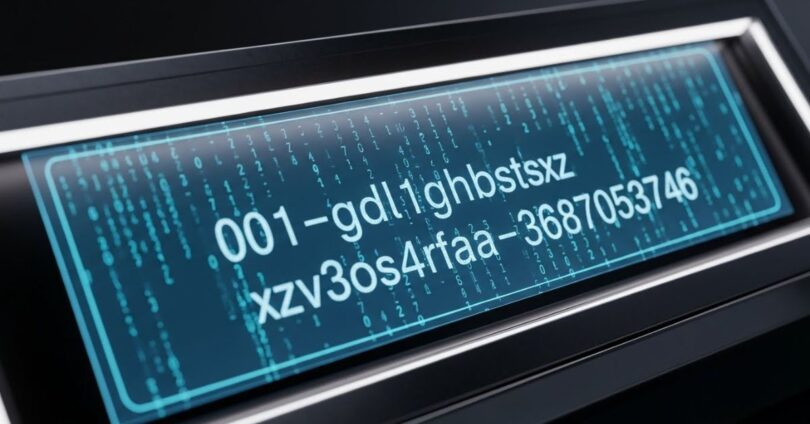

The keyword 001-gdl1ghbstssxzv3os4rfaa-3687053746 appears to be a complex alphanumeric identifier that represents a unique digital code. In the modern technological world, such identifiers are widely used across databases, cloud platforms, security systems, and enterprise software. Although the string may look random at first glance, it follows a structured pattern that serves a meaningful technical purpose.
Unique identifiers are essential because they allow systems to differentiate between millions or even billions of digital records. Without them, it would be impossible to accurately manage data, track user activity, or ensure system security. This article provides a complete, in-depth explanation of the keyword 001-gdl1ghbstssxzv3os4rfaa-3687053746, covering its structure, purpose, real-world applications, advantages, and future relevance.
Understanding the Structure of 001-gdl1ghbstssxzv3os4rfaa-3687053746
The identifier 001-gdl1ghbstssxzv3os4rfaa-3687053746 can be divided into three distinct segments. Each part potentially carries specific meaning depending on the system that generated it. The first segment “001” often represents a version number, category, or batch sequence. It may indicate that the identifier belongs to a particular dataset or system module.
The second segment “gdl1ghbstssxzv3os4rfaa” is an alphanumeric string that appears randomly generated. This section ensures uniqueness and security. Randomized strings are widely used to prevent duplication and to make identifiers difficult to guess. This increases protection against unauthorized access.
The final segment “3687053746” is purely numeric and may represent a timestamp, system reference, or sequential number. It can be used to track when the identifier was created or which process generated it. Combined, these segments create a hybrid structure that balances readability, security, and system organization.
Why Unique Identifiers Are Important in Digital Systems
Unique identifiers play a crucial role in modern digital infrastructure. They allow systems to store, retrieve, and manage information efficiently. Every user account, transaction, file, or data entry typically receives a unique code to prevent confusion and errors.
For example, in banking systems, each transaction has a unique identifier so it can be tracked and verified. In cloud storage, each uploaded file is assigned a unique code to avoid conflicts even if multiple users upload files with the same name. Identifiers like 001-gdl1ghbstssxzv3os4rfaa-3687053746 ensure that every record remains distinct.
These identifiers also support system performance. Databases use them as primary keys, allowing faster search and retrieval. Without unique IDs, systems would rely on names or descriptions, which could easily overlap and cause serious data integrity issues.
Common Applications of 001-gdl1ghbstssxzv3os4rfaa-3687053746
Identifiers similar to 001-gdl1ghbstssxzv3os4rfaa-3687053746 are used across many industries. In cloud computing, they identify virtual machines, storage buckets, and API tokens. In e-commerce platforms, they track orders, shipments, and customer profiles.
Cybersecurity systems use such identifiers to monitor sessions, authentication attempts, and access logs. Each login attempt may be assigned a unique code, allowing administrators to detect suspicious behavior.
In software development, these codes are often assigned to projects, builds, and bug reports. This allows teams to track changes and updates accurately. Healthcare systems use identifiers to label patient records while protecting privacy.
Because these identifiers are system-generated, they ensure consistency and prevent duplication across large platforms that handle massive amounts of data daily.
Comparison of Identifier Formats
Different systems use different formats for unique identifiers. Some rely on simple numeric sequences, while others use complex combinations of letters and numbers. The hybrid format of 001-gdl1ghbstssxzv3os4rfaa-3687053746 offers a balanced approach.
Below is a table comparing this identifier format with other common types.
| Identifier Type | Example Format | Characteristics | Common Usage |
| Numeric ID | 123456789 | Sequential, simple, easy to read | Databases, invoices |
| UUID | 550e8400-e29b-41d4-a716-446655440000 | Random, globally unique | APIs, software systems |
| Alphanumeric Code | AB12CD34 | Mixed characters, customizable | Inventory tracking |
| Hybrid Identifier | 001-gdl1ghbstssxzv3os4rfaa-3687053746 | Multi-part, secure, informative | Cloud platforms, security systems |
This table shows how hybrid identifiers combine the advantages of readability and security. They can include meaningful prefixes while maintaining randomness to ensure uniqueness.
Security Advantages of Complex Identifiers
One of the biggest advantages of identifiers like 001-gdl1ghbstssxzv3os4rfaa-3687053746 is enhanced security. The randomized middle segment makes the code extremely difficult to guess. This is especially important for authentication tokens, password reset links, and secure file access URLs.
Attackers often attempt to guess IDs to gain unauthorized access. Simple numeric sequences are easier to predict, while complex alphanumeric strings significantly reduce this risk. Systems usually generate these identifiers using cryptographic algorithms, ensuring unpredictability.
In secure environments, these identifiers may expire after a certain time or be linked to specific permissions. This prevents misuse even if the code is exposed. Therefore, such identifiers are a core part of cybersecurity strategies.
Data Management and Tracking Benefits
From a data management perspective, unique identifiers simplify operations. Administrators can track user activity, monitor system performance, and analyze trends using these codes. Every action performed within a system can be logged and associated with a specific identifier.
For example, if a file is deleted or modified, the system records the identifier along with the timestamp and user information. This creates a complete audit trail. In case of errors or disputes, administrators can trace exactly what happened and when.
In distributed systems, where data is stored across multiple servers, identifiers ensure consistency. Even if the data moves or is replicated, the identifier remains unchanged. This guarantees accurate referencing across the entire network.
Future of Identifier Systems
As technology continues to evolve, identifier systems are becoming more advanced. Blockchain technology uses cryptographic hashes as unique identifiers for transactions. Artificial intelligence platforms assign IDs to training datasets and model versions.
In the future, identifiers may integrate biometric data or behavioral patterns to enhance security. Smart cities, Internet of Things devices, and autonomous systems will rely heavily on unique identifiers to function efficiently.
The format seen in 001-gdl1ghbstssxzv3os4rfaa-3687053746 represents an early step toward more intelligent identification systems. As data volumes grow, the demand for secure and scalable identifiers will increase.
Conclusion
The keyword 001-gdl1ghbstssxzv3os4rfaa-3687053746 may appear random, but it represents a powerful concept in modern technology. Unique identifiers are essential for organizing data, enhancing security, and ensuring system efficiency. From cloud platforms to cybersecurity, these codes play a vital role in everyday digital operations.
By understanding its structure, purpose, and applications, we gain insight into how digital systems maintain accuracy and trust. As technology advances, identifiers like this will continue to evolve, becoming even more secure and intelligent. They will remain a fundamental component of digital infrastructure for years to come.