
In the rapidly evolving landscape of digital security, new protocols and authentication systems emerge regularly to protect sensitive information and ensure safe online transactions. Among these developments, 123safe67 has gained attention as a sophisticated security framework designed to address contemporary cybersecurity challenges. This article explores the intricacies of 123safe67, examining its architecture, implementation strategies, and the role it plays in safeguarding digital assets in an increasingly interconnected world.
The Foundation and Architecture of 123safe67
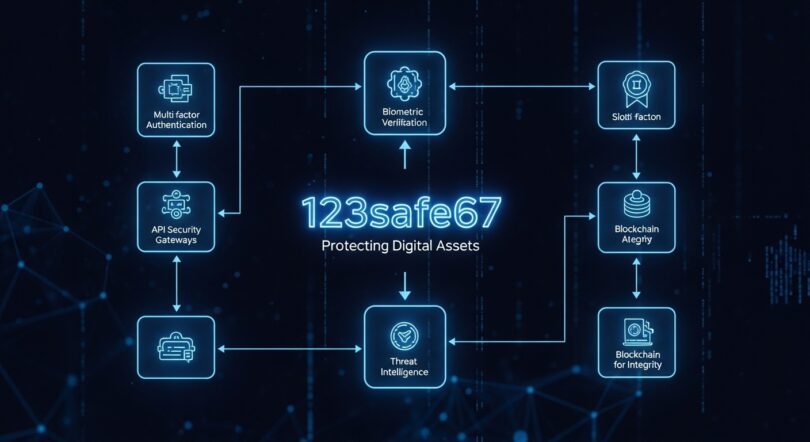
The 123safe67 protocol represents a multifaceted approach to digital security that combines traditional encryption methods with modern authentication techniques. At its core, the system operates on a seven-layer verification process, which is reflected in the numeric designation within its name. The “123” component references the three primary authentication stages, while “safe” denotes its security-focused purpose, and “67” indicates the six verification checkpoints combined with seven-bit encryption segments used throughout the authentication process.
The architecture of 123safe67 is built upon a foundation that prioritizes both security and usability. Unlike many security protocols that sacrifice user experience for enhanced protection, 123safe67 implements a streamlined verification system that maintains robust security standards while minimizing friction in the user journey. The protocol employs asymmetric encryption algorithms that generate unique key pairs for each transaction or session, ensuring that even if one key is compromised, the overall system integrity remains intact.
The technical infrastructure supporting 123safe67 includes distributed validation nodes that verify authentication requests across multiple servers simultaneously. This distributed approach prevents single points of failure and makes the system remarkably resilient against coordinated attacks. Each validation node maintains an independent record of authentication attempts, creating a comprehensive audit trail that can be analyzed for suspicious patterns or potential security breaches.
Implementation Strategies Across Different Platforms
Organizations implementing 123safe67 must consider various factors related to their existing infrastructure and specific security requirements. The protocol supports multiple integration methods, ranging from API-based implementations for web applications to embedded solutions for mobile platforms and Internet of Things devices. The flexibility of 123safe67 allows it to function effectively across diverse technological environments without requiring extensive modifications to existing systems.
For web-based applications, 123safe67 typically integrates through JavaScript libraries that handle the client-side authentication process while communicating with backend validation servers. This approach ensures that sensitive authentication data never passes through intermediate systems that might be vulnerable to interception. The protocol supports both synchronous and asynchronous authentication flows, allowing developers to choose the implementation method that best suits their application architecture.
Mobile implementations of 123safe67 leverage platform-specific security features such as biometric authentication, secure enclaves, and hardware-backed keystores. These native integrations enhance the overall security posture by utilizing the advanced security capabilities built into modern mobile devices. The protocol automatically adapts its verification requirements based on the security features available on each device, ensuring consistent protection across different hardware configurations.
Enterprise deployments often require additional customization to align with existing security policies and compliance requirements. The 123safe67 framework accommodates these needs through configurable security parameters that allow organizations to adjust authentication thresholds, session timeout periods, and verification frequency according to their specific risk tolerance levels. This adaptability makes 123safe67 suitable for industries with stringent regulatory requirements, including financial services, healthcare, and government sectors.
Comparative Analysis of Security Protocols
To better understand the position of 123safe67 within the broader security landscape, examining its characteristics alongside other established protocols provides valuable context. The following table illustrates key differences between 123safe67 and alternative authentication systems:
| Feature | 123safe67 | OAuth 2.0 | SAML 2.0 | OpenID Connect |
|---|---|---|---|---|
| Authentication Layers | 7 | 1-2 | 3 | 2-3 |
| Encryption Standard | 256-bit AES | Varies | 128-256 bit | 256-bit |
| Session Duration | Configurable | Token-based | Assertion-based | Token-based |
| Multi-factor Support | Native | Extension Required | Limited | Extension Required |
| Cross-platform Compatibility | Universal | High | Medium | High |
| Implementation Complexity | Moderate | Low | High | Moderate |
| Resource Requirements | Medium | Low | High | Medium |
This comparison demonstrates that 123safe67 occupies a unique position by offering comprehensive security features while maintaining reasonable implementation complexity. The native multi-factor support distinguishes it from protocols that require additional extensions or third-party services to achieve similar security levels.
Security Benefits and Risk Mitigation
The primary advantage of implementing 123safe67 lies in its ability to mitigate a wide range of security threats through its layered authentication approach. The protocol effectively defends against common attack vectors including credential stuffing, man-in-the-middle attacks, session hijacking, and replay attacks. Each security layer addresses specific vulnerabilities, creating a defense-in-depth strategy that significantly increases the difficulty for malicious actors attempting to compromise protected systems.
One of the most significant security enhancements provided by 123safe67 is its resistance to credential-based attacks. Even if an attacker obtains valid user credentials through phishing or data breaches, the additional verification layers prevent unauthorized access. The protocol requires multiple forms of verification that cannot be easily replicated or stolen simultaneously, creating substantial barriers for attackers who might possess partial authentication information.
The protocol’s approach to session management further enhances security by implementing dynamic session tokens that change with each request. This continuous rotation of authentication credentials means that intercepted tokens become useless almost immediately, eliminating the value of session hijacking attempts. Additionally, 123safe67 employs contextual analysis that examines various factors including device fingerprints, geographic locations, and access patterns to identify potentially fraudulent authentication attempts.
Risk mitigation extends beyond preventing unauthorized access to include comprehensive logging and monitoring capabilities. Every authentication attempt generates detailed metadata that organizations can analyze to identify trends, detect anomalies, and respond to potential security incidents. This visibility enables security teams to maintain situational awareness and implement proactive measures before threats escalate into actual breaches.
User Experience Considerations
Despite its robust security architecture, 123safe67 prioritizes user experience by implementing intelligent authentication workflows that balance security with convenience. The protocol employs adaptive authentication that adjusts verification requirements based on risk assessments performed in real-time. Low-risk scenarios such as accessing non-sensitive information from recognized devices may require minimal verification, while high-risk situations trigger additional authentication steps.
The concept of progressive authentication represents one of the most user-friendly features within 123safe67. Rather than requiring all verification steps upfront, the protocol can escalate authentication requirements as users attempt to access increasingly sensitive resources or perform critical operations. This graduated approach prevents security measures from becoming obstacles during routine interactions while ensuring appropriate protection for sensitive actions.
User enrollment and onboarding processes designed for 123safe67 implementations focus on simplicity and clarity. The initial setup typically guides users through registering multiple authentication factors without overwhelming them with technical details. Clear instructions and intuitive interfaces help users understand the security benefits while making the enrollment process as frictionless as possible. Organizations that successfully implement these user-centric approaches often see higher adoption rates and reduced support requests related to authentication issues.
The protocol also supports remember-me functionality that allows trusted devices to maintain authenticated sessions for extended periods without compromising security. This feature leverages device-specific tokens and periodic background verification to ensure that convenience features do not create security vulnerabilities. Users appreciate the ability to avoid repeated authentication on their personal devices while still benefiting from stringent security when accessing systems from unfamiliar locations or devices.
Integration with Emerging Technologies
As technology continues to evolve, 123safe67 demonstrates forward compatibility with emerging authentication methods and security paradigms. The protocol’s modular architecture allows it to incorporate new verification mechanisms as they become available, ensuring that implementations remain relevant and effective against evolving threats. This adaptability positions 123safe67 as a long-term security solution rather than a temporary fix for current challenges.
Artificial intelligence and machine learning integration represents a significant area of development for 123safe67 implementations. Advanced analytics can process the extensive authentication data generated by the protocol to identify subtle patterns indicative of compromised accounts or coordinated attack campaigns. These insights enable automated responses that can lock suspicious accounts, trigger additional verification steps, or alert security personnel to investigate potential incidents.
Blockchain technology offers interesting possibilities for enhancing the distributed validation architecture underlying 123safe67. Some organizations experiment with blockchain-based authentication registries that provide immutable records of authentication events while maintaining user privacy through cryptographic techniques. These implementations leverage the transparency and security characteristics of blockchain systems to create audit trails that cannot be tampered with or disputed.
The growing prevalence of passwordless authentication aligns well with the 123safe67 framework, which already supports diverse authentication factors beyond traditional passwords. Biometric verification, hardware security keys, and behavioral authentication methods integrate seamlessly with the protocol’s layered approach. Organizations implementing 123safe67 can gradually transition toward passwordless systems while maintaining comprehensive security throughout the migration process.
Compliance and Regulatory Considerations
Organizations operating in regulated industries must ensure that their security measures meet specific compliance requirements. The 123safe67 protocol addresses many common regulatory standards through its comprehensive authentication and audit capabilities. The detailed logging functionality provides the documentation necessary for compliance audits, while the strong authentication requirements satisfy mandates for protecting sensitive information.
Financial institutions implementing 123safe67 benefit from its alignment with standards such as Payment Card Industry Data Security Standard and various banking regulations that mandate strong authentication for financial transactions. The protocol’s multi-factor authentication capabilities and session management features directly address requirements for verifying user identity and protecting account access. Additionally, the encryption standards employed by 123safe67 meet or exceed the specifications outlined in most financial security regulations.
Healthcare organizations subject to regulations protecting patient information find that 123safe67 provides the access controls and audit trails required for compliance. The protocol’s ability to enforce role-based access restrictions and maintain detailed records of who accessed what information and when directly supports regulatory requirements for protecting health records. The strong authentication measures also help prevent unauthorized access that could result in data breaches and compliance violations.
Government agencies and contractors working with classified or sensitive information can configure 123safe67 to meet stringent security requirements. The protocol supports the implementation of multi-level security frameworks where different types of information require different authentication thresholds. This flexibility allows organizations to create security architectures that align precisely with their classification schemes and access control policies.
Future Developments and Industry Adoption
The trajectory of 123safe67 development points toward increasingly sophisticated integration with identity management ecosystems and zero-trust security frameworks. Research and development efforts focus on enhancing the protocol’s ability to function as part of comprehensive security architectures rather than operating as an isolated authentication system. This holistic approach recognizes that modern security requires coordination across multiple systems and protocols.
Industry adoption of 123safe67 continues to grow as organizations recognize the limitations of traditional authentication methods in addressing contemporary threats. Early adopters report significant reductions in account compromise incidents and unauthorized access attempts following implementation. These success stories encourage broader adoption across industries seeking to strengthen their security postures without imposing excessive burdens on legitimate users.
The developer community surrounding 123safe67 contributes to its ongoing evolution through open-source implementations, documentation improvements, and the creation of integration tools. This collaborative approach accelerates innovation and ensures that the protocol remains responsive to real-world implementation challenges. Community-driven development also helps identify potential vulnerabilities or weaknesses before they can be exploited by malicious actors.
Looking forward, 123safe67 is positioned to play an important role in securing the next generation of digital services and applications. As organizations continue migrating critical operations to cloud platforms and embracing digital transformation initiatives, the need for robust, flexible authentication solutions becomes increasingly critical. The protocol’s demonstrated ability to balance security, usability, and adaptability makes it well-suited to meet these evolving requirements across diverse industries and use cases, ensuring that digital systems remain both accessible to legitimate users and protected against unauthorized access.